.png)
Publications List
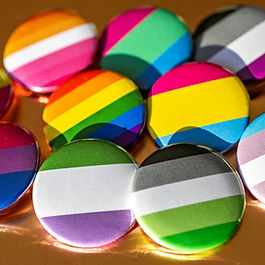
Exploring social perceptions of queer and trans music therapists and clients: A qualitative story completion study
Bethany Mulley; Victoria Clarke; Luke Annesley

What do we mean by ‘creative health’? The benefits of defining ‘creativity’ in the arts and health field
Nicola Holt

Introduction: Charting areas of the arts and health
Nicola Holt; Sofia Vougioukalou; Victoria Tischler; Elisabetta Corvo

Conclusion: Reflections on the arts and health as a field
Nicola Holt; Sofia Vougioukalou; Victoria Tischler; Elisabetta Corvo
Arts in social prescribing
Nicola Holt; Sofia Vougioukalou; Helen Chatterjee

Unpacking the creativity advantage: Lessons from psychology on the benefits of the arts
Molly Holinger; Nicola Holt; James Kaufman,

Using the visual arts and crafts for health and wellbeing: The EPICS framework
Nicola Holt; Alison Rouse; Sophie Olson

Words as therapy
Christine Ramsey-Wade; Claire Williamson; Jose Billington; Carol Ireland

Apples and oranges? The importance of recognising heterogeneity in Arts and Health research publications
Anita Jensen; Nicola Holt; Hilary Bungay

Arts-based interventions: Why it’s complex, and why that matters: Comment on “Can arts-based interventions improve health? A conceptual and methodological critique” by Skov and Nadal
Nicola Holt

Understanding the silences, not just the music: An exploration into Music Therapists’ meaning making of silence in improvisational music therapy
Garrick Wareham; Luke Annesley

Which personal and social resources help adolescents to recover from negative affect in daily life? An experience sampling study
Nicola Holt et al.

‘The First Cut is the Deepest’: A conversation between a music therapist and their first training supervisor, 15 years on
Luke Annesley; Andy Lale

Student-generated metaphor in research supervision: An arts-based method
Christine Ramsey-Wade; Matthew Cott

‘Go with the "wave of music" to dive deep’: Exploring perceptions of psychedelic-assisted therapy and the role of music within this practice
Ann MacLeod; Victoria Clarke; Catherine Warner

Critical perspectives on art on prescription
Hilary Bungay; Nicola Holt; Anita Jensen

‘I’m coming out’: The role of music in LGBTQ+ identities
Karen Jones; Victoria Clarke; Luke Annesley

Developing an evaluation strategy in Kashmir: Assessing the impact of an arts intervention with school children in an area of conflict
Nicola Holt; Michael Buser; Emma Brännlund; Julie Mytton; Lorraine Leeson; Vikramjeet Sinha; Anarupa Roy
The impact of Arts on Prescription on individual health and wellbeing: A systematic review with meta-analysis
Anita Jensen; Nicola Holt; Sayaka Honda; Hilary Bungay

‘Where do you feel it most?’ Using body mapping to explore the lived experiences of racism with 10- and 11-year-olds
Luci Gorell Barnes et al.

In/secure childhoods: Children and conflict in Kashmir
Emma Brännlund; Michael Buser; Nicola Holt; Julie Mytton; Afeefa Fazli, Loraine Leeson; Vikramjeet Sinha; Anarupa Roy

"Music therapy is the very definition of white privilege": Music therapists' perspectives on race and class in UK music therapy
Tamsin Mains; Victoria Clarke; Luke Annesley

"Surprisingly helpful": An exploration of trainee and registered music therapists' perspectives on the current role of personal therapy in music therapy training in the United Kingdom
Megan Brand; Victoria Clarke; Catherine Warner

Colouring for wellbeing: Evidence and applications
Nicola Holt

Art and the schizophrenic spectrum
Nicola Holt

The tree(s) of hope and ambition: An arts-based social science informed, participatory research method to explore children's future hopes, ambitions and support in relation to COVID-19
Luci Gorell Barnes et al.

The impact of remote arts on prescription: Changes in mood, attention and loneliness during art workshops as mechanisms for wellbeing change
Nicola Holt
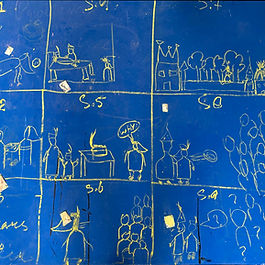
Creating a difference – a role for the arts in addressing child wellbeing in conflict-affected areas
Michael Buser; Emma Brännlund; Nicola Holt; Loraine Leeson; Julie Mytton

Experiences of music therapists sharing improvisation remotely during lockdown
Luke Annesley; Nicky Haire

Searching for Lauren Berlant: Reflections on writing, temporality and loss
Clare Johnson

The use of “art” as a resource in recovery from the impact of sexual abuse in childhood: A qualitative systematic review
Alison Rouse; Elizabeth Jenkinson; Catherine Warner

Let the atrocious images haunt us: Encounters with conflict and connection in visual art making
Alison Rouse

‘You don't take things too seriously or un-seriously’: Beyond recovery to liminal and liminoid possibility in a community arts and mental health project
Mike Chase et al.

‘Sewing Together’: An idiographic study of a music therapist’s experiences of a group at a special school for children and young people with severe and complex special educational needs
Luke Annesley; Nicolette O'Neill

Heritage art with an intent
Nina Sabnani; Michael Buser

Learning how to learn: The role of music and other expressive arts in responding to Early Leaving from Education and Training (ELET) in the STALWARTS project
Catherine Warner et al.

'It's just a different dimension': Music therapists' experiences of hearing loss
Sara Cole; Catherine Warner

Interdisciplinary Research in Rajasthan, India: Exploring the Role of Culture and Art to Support Rural Development and Water Management
Michael Buser

Therapeutic writing for disordered eating: A systematic review
Christine Ramsey-Wade; Heidi Williamson; Jane Meyrick

Parents’ perspectives on their children’s music therapy: A synthesis of qualitative literature
Luke Annesley; Eamon McKeown; Katherine Curtis-Tyler

Tracking momentary experience in the evaluation of arts-on-prescription services: Using mood changes during art workshops to predict global wellbeing change
Nicola Holt

Creativity and Schizotypy
Nicola Holt

Reading and writing for well-being: A qualitative exploration of the therapeutic experience of older adult participants in a bibliotherapy and creative writing group
Brianna Malyn; Zoe Thomas; Christine Ramsey-Wade

Challenges and joys of using the experience sampling method to examine the impact of the arts on wellbeing
Nicola Holt
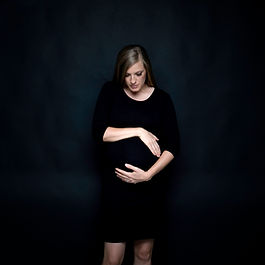
Maternal art and post-natal wellbeing: Proximity and separation in Lena Simic’s Contemplation Time (2007-8) and Eti Wade’s Jocasta (2008)
Clare Johnson

From nursing Virgins to brelfies: The project of maternal femininity
Clare Johnson; Jenny Rintoul

Cognitive and affective benefits of coloring: Two randomized controlled crossover studies
Nicola Holt; Leah Furbert; Emily Sweetingham

Two kinds of music therapy: Exploring ‘genre’ in the context of clinical practice
Luke Annesley

Machinic assemblages of publicness
Michael Buser

Music therapy within an integrated project for families exposed to domestic violence: A qualitative study of professionals’ perspectives
Luke Annesley

The expression of schizotypy in the daily lives of artists
Nicola Holt
Is poetry therapy an appropriate intervention for clients recovering from anorexia? A critical review of the literature and client report
Christine Ramsey-Wade; Ellen Devine

Using the experience-sampling method to examine the psychological mechanisms by which participatory art improves wellbeing
Nicola Holt

Atmospheres of stillness in Bristol’s Bearpit
Michael Buser

Becoming ecological citizens: Connecting people through performance art, food matter and practices
Emma Roe; Michael Buser

Enabling connections: Counsellor creativity and therapeutic practice
Alison Rouse; Joe Armstrong; John McLeod

Schizotypy: A creative advantage?
Nicola Holt

The Music Therapist in School as Outsider
Luke Annesley

The muse in the machine: Creativity, anomalous experiences and mental health
Nicola Holt

Introspective discourse and the poetics of subjective experience
Robin Wooffitt; Nicola Holt

Emin is screaming: Empathy as affirmative engagement in Tracey Emin's Homage to Edvard Munch and All My Dead Children (1998)
Clare Johnson